
Sex Offender Checks in Midland County
The Texas Department of Public Safety, or DPS, manages the Texas Public Sex Offender Registry under Code of Criminal Procedure Chapter 62. Midland County's local authorities collect and verify the details that flow into that statewide system. A person who lives inside Midland city reports to the city's local law-enforcement authority. A registrant outside a city reports to the county authority. That split matters when a reader needs to confirm which office is responsible for an entry or report a possible compliance issue.
Begin with the state registry because it is the official public search layer for Midland County. Search by the most reliable facts available, then read the full profile instead of relying on a pin or result-list summary. The DPS registration-program overview explains how local verification and state publication fit together.
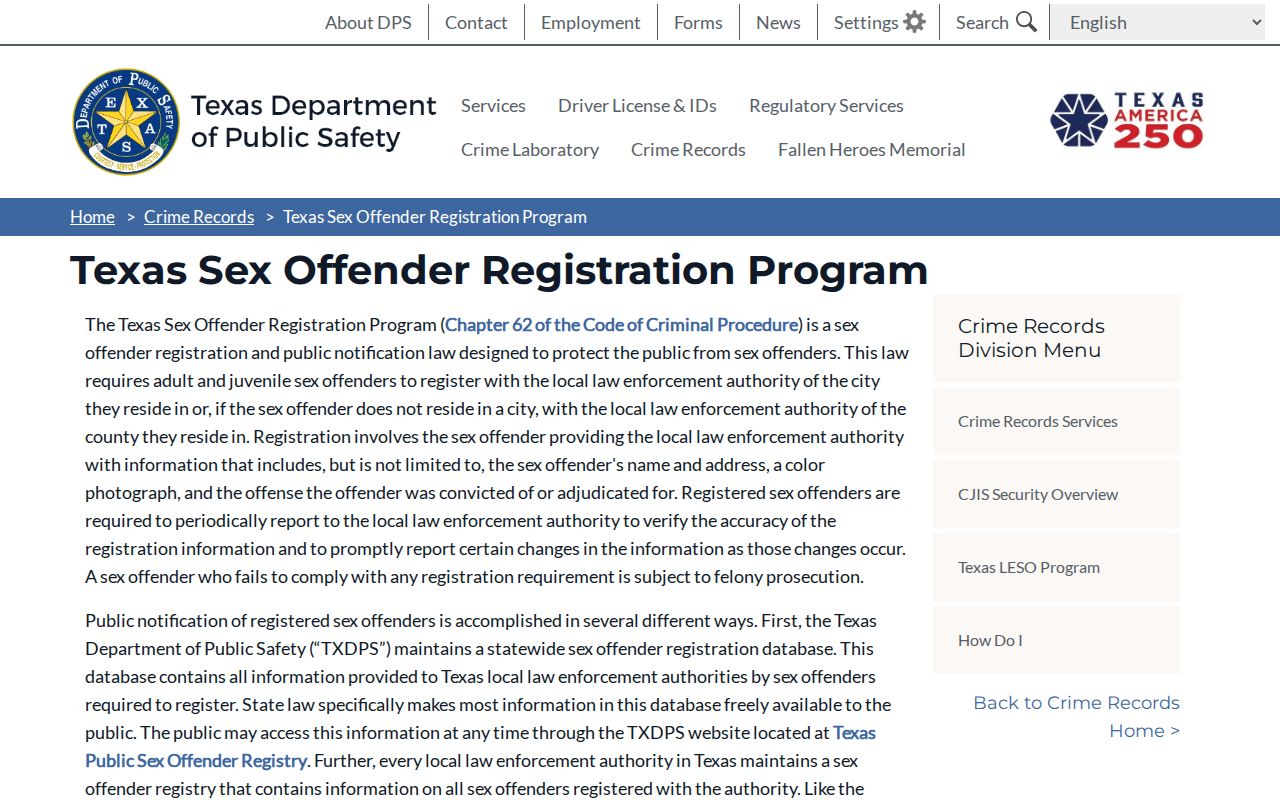
The state overview places Midland County reporting duties within Chapter 62 rather than treating the public result as a stand-alone local list.
How to Search the Texas Public Sex Offender Registry
The official Texas Public Sex Offender Registry accepts both person-based and place-based searches. Spelling, aliases, city boundaries, and ZIP codes can change which Midland County results appear. Use several routes when the first query is too broad or yields no likely match.
- Open the DPS public registry and read its conditions of use.
- Enter a name, or use an address, city, ZIP, county, or map route.
- Filter the place search to Midland County and compare likely result details.
- Open the full profile and review status, authority, offense, duration, and verification information.
| Search route or field | Type | Required | How to use it |
|---|---|---|---|
| Name | Text | Depends on route | Try first and last name; spelling and aliases affect matches. |
| Address | Text | Depends on route | Use a street, city, or ZIP for a place-based check. |
| City | Text or selection | Optional | Choose Midland for results tied to the city. |
| County | Selection | Optional | Select Midland to focus on the county. |
| ZIP | Text | Optional | Narrows a geographic query. |
| Map or radius | Map control | Optional | Read the live interface because radius options can change. |
| Search or reset | Button | Not applicable | Run the query or clear the fields. |
The full state profile is the right place to verify a Midland County match. A result-list label or a third-party summary does not provide the same reporting context.
Midland County Registry Across State Lines
A Midland County address search covers Texas registry data. It does not replace a broader check when the area of concern crosses a state line or a person has lived elsewhere. The U.S. Department of Justice operates the National Sex Offender Public Website, commonly called NSOPW, as a search layer across participating jurisdictions. It is useful when travel, a move, or an out-of-state address makes a Texas-only query too narrow.
The national public registry search is a supplement, not a new source record.
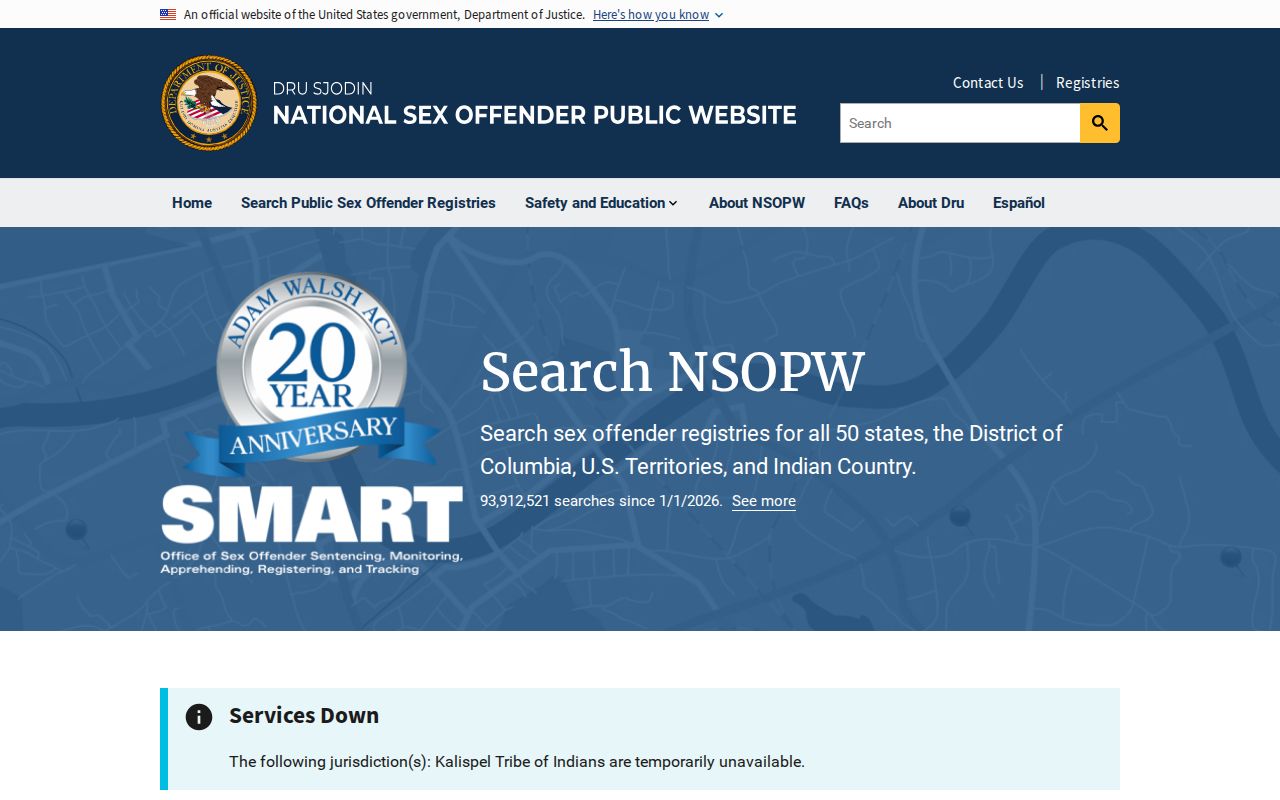
When NSOPW returns a match, follow its jurisdiction link and read the maintaining agency's live profile for the most useful status and verification context.
Inside a Registry Profile
A public Midland County profile can combine identity details, physical descriptors, location, registration status, reporting authority, and the reportable offense. DPS publishes most registration information, but it does not publish every fact gathered for administration. The table shows the main public categories without reproducing or spotlighting any private individual's entry.
| Name and aliases | Displayed identity names that can help distinguish similarly named people. |
|---|---|
| Photo and description | A color photograph plus sex, race, age or date of birth, height, weight, hair, eyes, and visible marks where published. |
| Registered location | The address or location supplied under the public rules, read with its verification context. |
| Offense details | Offense description or statute, conviction or adjudication date, and lawful victim age or sex category when displayed. |
| Risk information | A low, moderate, or high level where assigned for notification purposes. |
| Status and authority | Compliance or registration status, the reporting authority, and end-date or lifetime indicators. |
A risk label does not set the registration term by itself. The offense and Chapter 62 rules control the duty. Vehicle data may be collected for specified offenses, but a reader should confirm what the live profile makes public rather than assume it always appears.
Private Midland County Registry Fields
The public registry is detailed, but DPS expressly keeps several categories out of public view. Those include Social Security numbers, driver's-license numbers, phone numbers, online identifiers, employer identity and contact information, other data required only for DPS administration, and victim-identifying information. A juvenile registration can also be nonpublic by court order. An omitted field is therefore not proof that DPS or a local Midland County authority never collected it.
The DPS Crime Records FAQ describes the boundary between public registry data and restricted information.
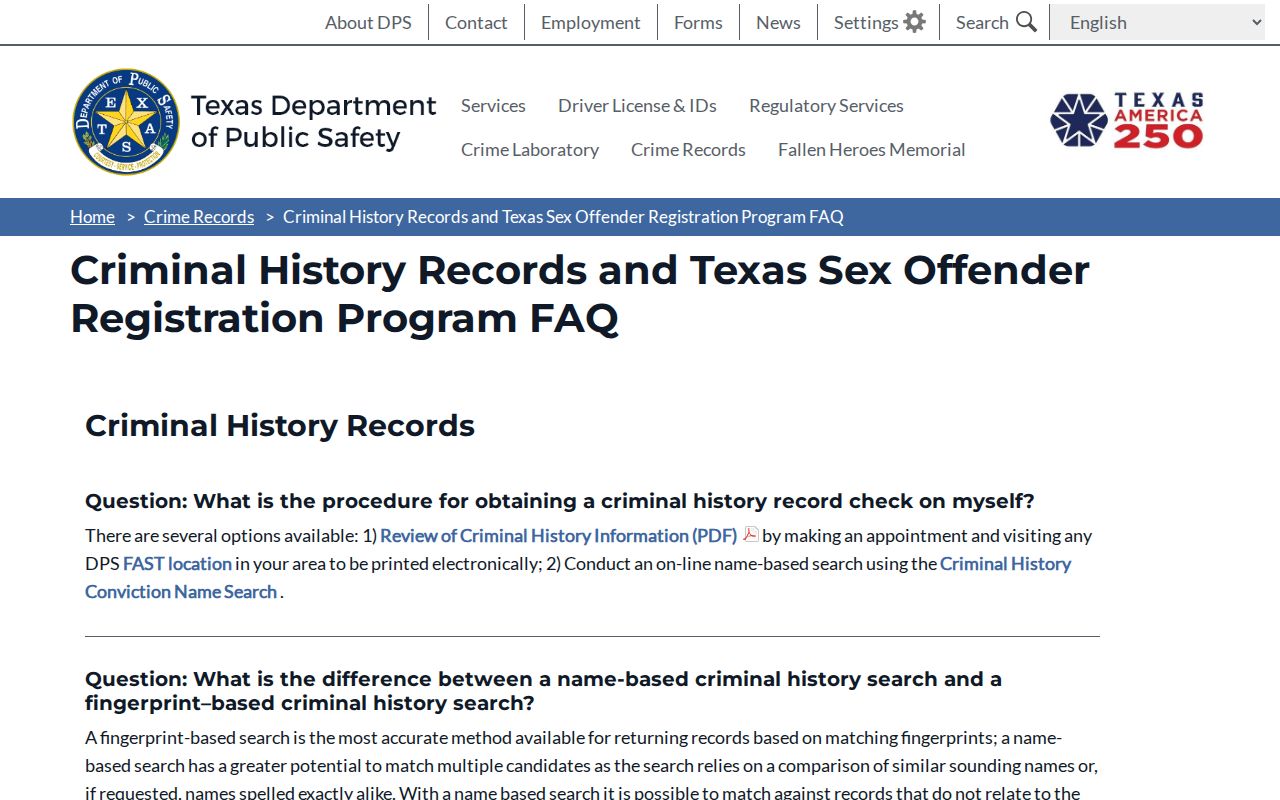
The FAQ helps explain why a Midland County profile can be useful for safety planning while still excluding sensitive identifiers and victim information.
Texas Registration Levels and Requirements
Texas does not use a simple federal Tier I, II, and III duration chart. Code of Criminal Procedure Chapter 62 assigns the registration period according to the reportable offense and the person's circumstances. Many listed offenses carry a lifetime duty. Other reportable convictions or adjudications generally run for ten years after release or discharge from supervision. Juvenile orders, exemptions, early termination, deregistration, and nonpublic rules can change the result in special cases.
| Texas category | General duration | Public meaning |
|---|---|---|
| Lifetime | Lifetime registration | Applies to enumerated serious or repeat offenses and other statutory circumstances under article 62.101(a). |
| Ten-year | Ten years after release or discharge | Applies to other covered reportable convictions or adjudications under article 62.101(b). |
| Juvenile or special | Depends on the controlling order and law | Exemption, early termination, deregistration, or nonpublic treatment may apply. |
Risk levels such as low, moderate, or high can guide notification, yet they do not replace the statutory duration analysis. The listed authority, profile status, and duty end indicator provide better context for a Midland County result.
Midland County Registry Notification History
Texas registration began on September 1, 1991. DPS explains that later law applied registration retroactively in defined circumstances. That history is one reason two Midland County profiles tied to different convictions may show duties that do not fit a simple modern tier label. Community notification also has its own track. DPS or a local authority may mail postcards when a high-risk registrant or a civilly committed sexually violent predator enters a community.
The DPS Crime Records laws index collects the state provisions behind registry publication and related record rules.
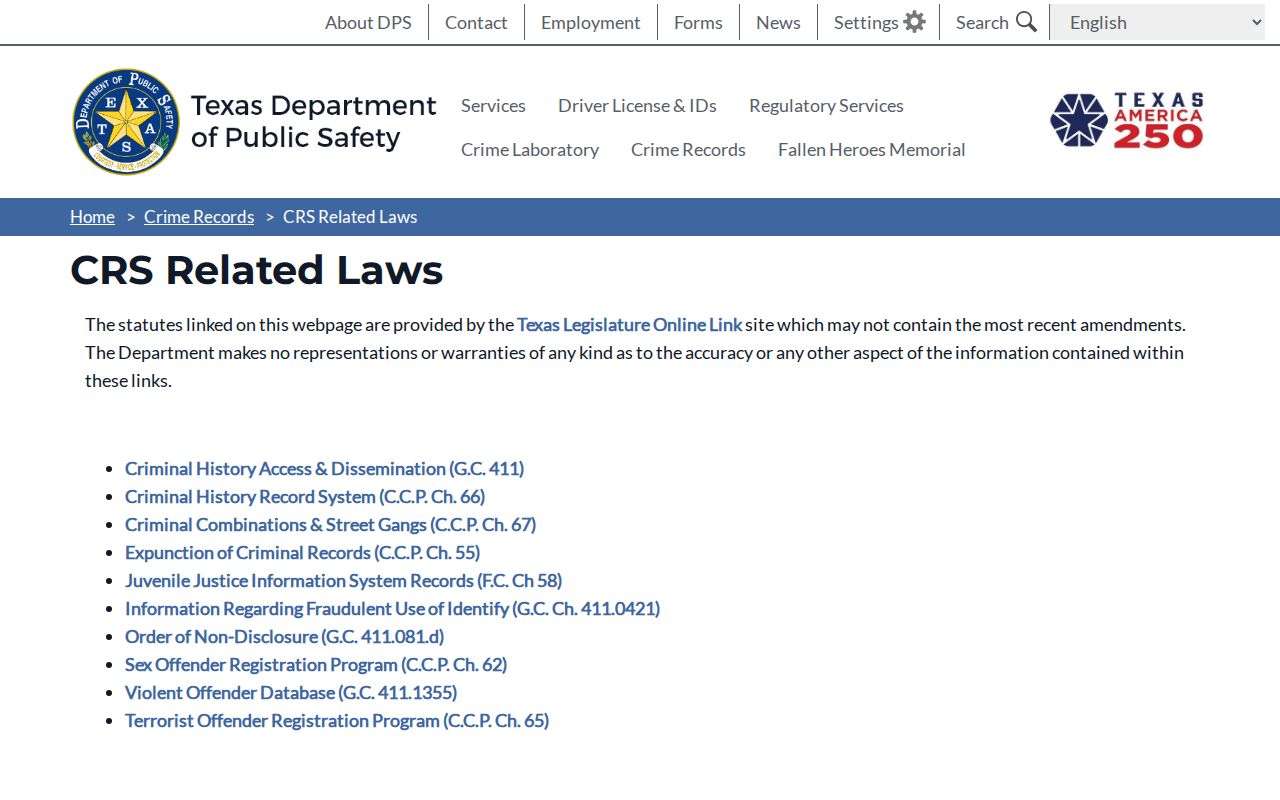
The laws index shows why the public Midland County profile, local reporting work, and community notices operate as parts of one statutory system.
Stale Midland County Registry Addresses
First read the profile's status, reporting authority, and most recent verification context. Compare the written address with the map and make sure the result actually belongs to Midland County. A move may be in the local verification and DPS reporting pipeline, so timing can matter. If the entry still appears inconsistent, report the concern to the responsible local law-enforcement authority or DPS. Give the profile information and the reason for concern. Do not investigate at the address yourself.
The DPS Crime Records Service contacts identify the state units that handle registry and criminal-record questions.
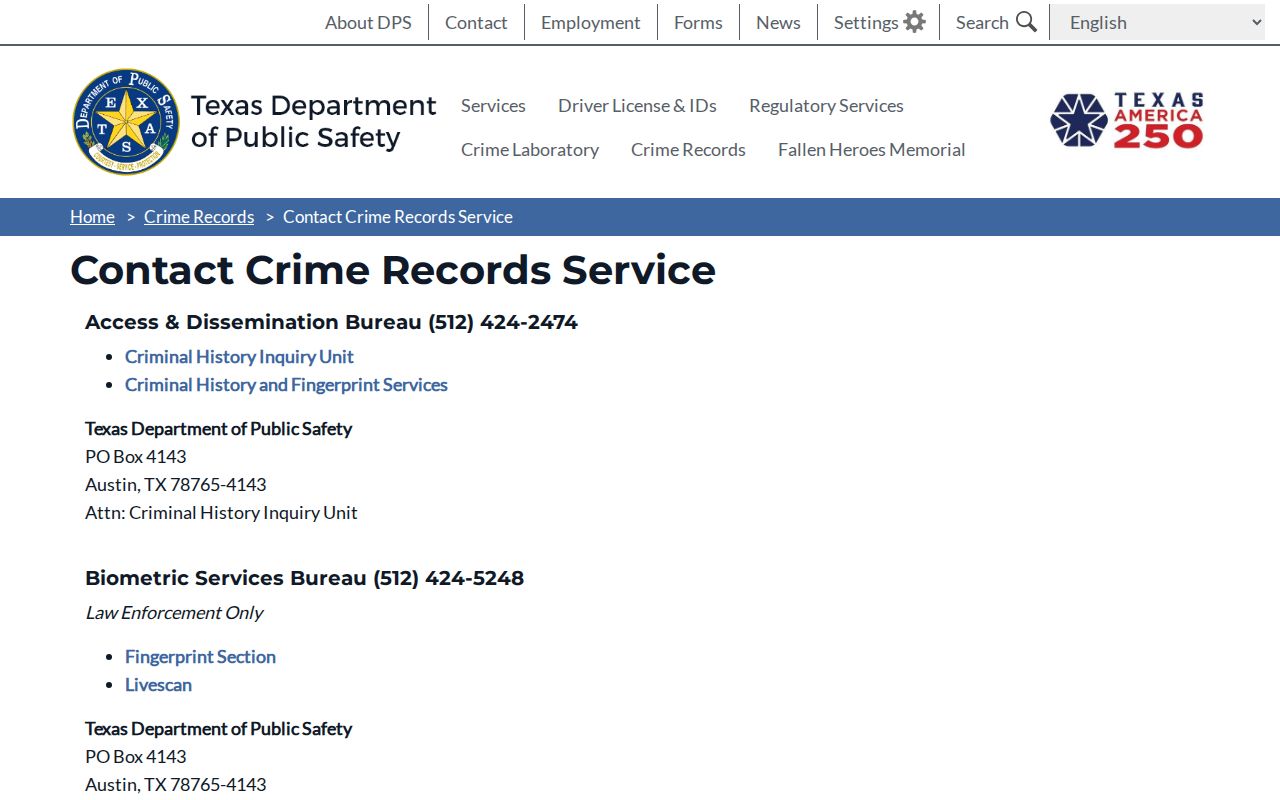
Using the contact directory keeps a Midland County compliance concern with trained officials and away from unsafe personal confrontation.
Community Notification and Lawful Use
Registry information supports community awareness and practical family-safety choices. Read a result in context, respect the legal limits on public information, and use official reporting channels for a concern. The profile documents a registration duty and its public fields. It is not a full Midland County criminal-history file, a prediction of future conduct, or an invitation to take action against a listed person or household.
Misuse is a crime: Chapter 62 and the registry's warnings prohibit using registry information to injure, harass, discriminate against, or commit a crime against a registrant or that person's family. Report suspected noncompliance to law enforcement and never confront the person.
For a question about the underlying conviction, use the court that issued the judgment. For a registry-status question, use the reporting authority or DPS. Keeping those roles separate helps Midland County readers avoid treating a public safety notice as a complete case record.